

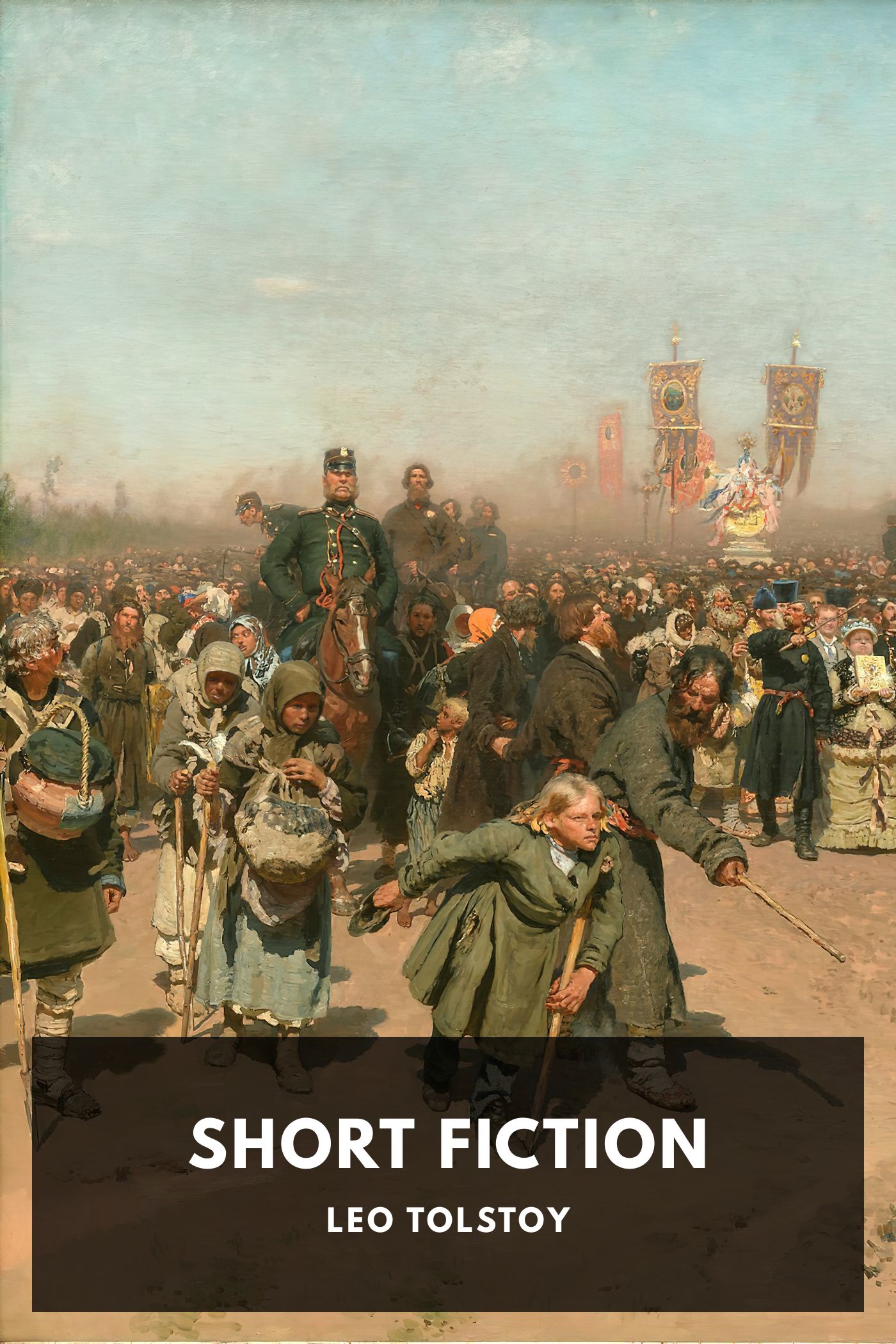
About this book
While perhaps best known for his novels War and Peace and Anna Karenina , the Russian author and religious thinker Leo Tolstoy was also a prolific author of short fiction. This Standard Ebooks edition compiles all of Tolstoy’s short stories and novellas written from 1852 up to his death, arranged in order of their original publication.
The stories in this collection vary enormously in size and scope, from short, page-length fables composed for the education of schoolchildren, to full novellas like “Family Happiness.” Readers who are familiar with Tolstoy’s life and religious experiences—as detailed, for example, in his spiritual memoir A Confession —may be able to trace the events of Tolstoy’s life through the changing subjects of these stories. Some early stories, like “The Raid” and the “Sevastopol” sketches, draw from Tolstoy’s experiences in the Caucasian War and the Crimean War when he served in the Imperial Russian Army, while other early stories like “Recollections of a Scorer” and “Two Hussars” reflect Tolstoy’s personal struggle with gambling addiction.
Later stories in the collection, written during and after Tolstoy’s 1870s conversion to Christian anarcho-pacifism (a spiritual and religious philosophy described in detail in his treatise The Kingdom of God Is Within You ), frequently reflect either Tolstoy’s own experiences in spiritual struggle (e.g. “The Death of Ivan Ilyitch”) or his interpretation of the New Testament (e.g. “The Forged Coupon”), or both. Many later stories, like “Three Questions” and “How Much Land Does a Man Need?” are explicitly didactic in nature and are addressed to a popular audience to promote his religious ideals and views on social and economic justice.
Book Details
- Print length
- 2,375 pages
- Language
- English
- Publisher
- Standard Ebooks
- Publication date
- April 27, 2021
Short Fiction
Leo TolstoyMore from Leo Tolstoy



More from Children's

Alice’s Adventures in Wonderland
Lewis Carroll

The Wonderful Wizard of Oz
L. Frank Baum

Kidnapped
Robert Louis Stevenson

The Prince and the Pauper
Mark Twain

The Railway Children
E. Nesbit

Anne of Green Gables
L. M. Montgomery

Fables
Aesop

Short Fiction
Beatrix Potter

Black Beauty
Anna Sewell

Through the Looking-Glass
Lewis Carroll