

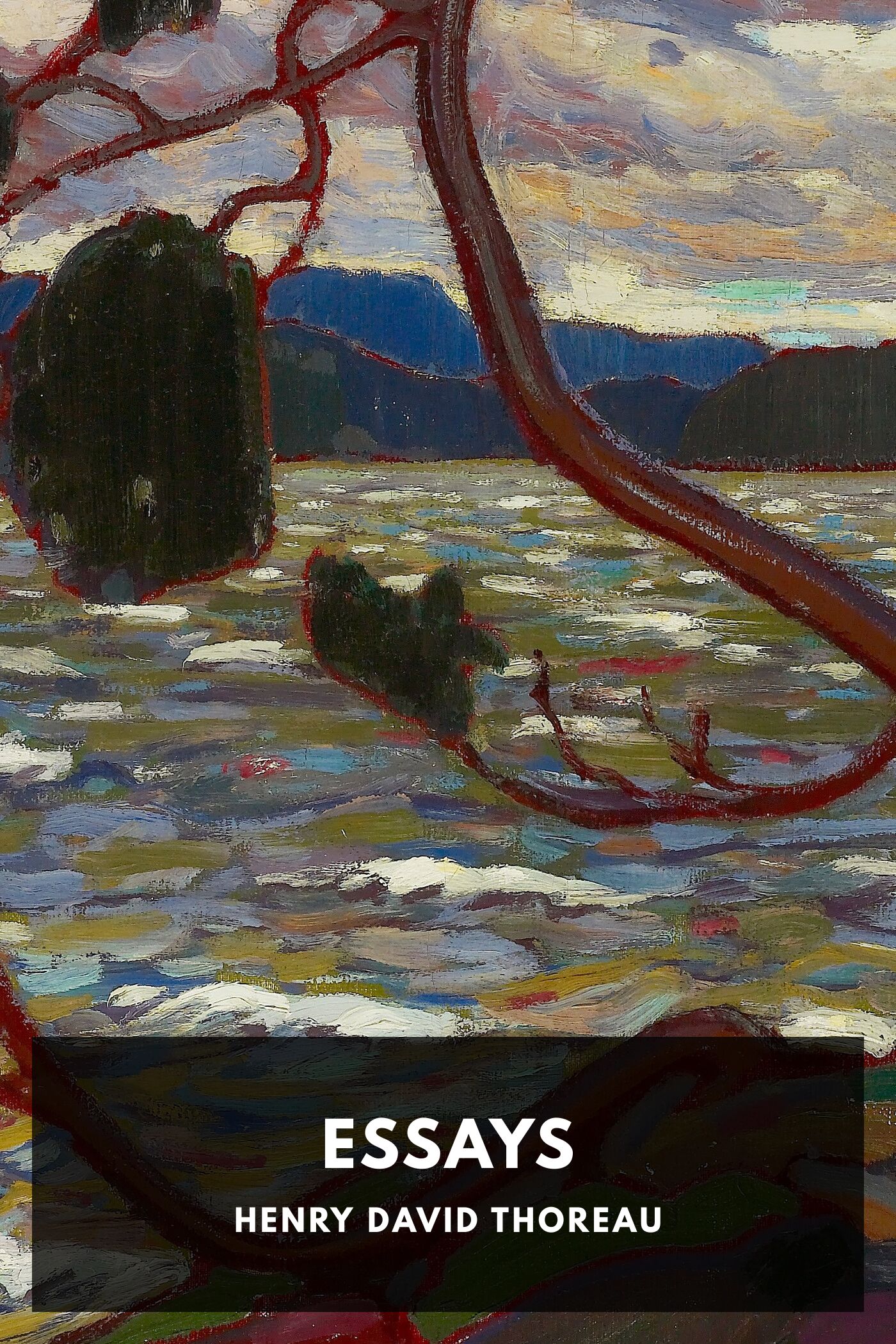
About this book
Though perhaps most famous for Walden , Henry David Thoreau was also a prolific essayist. Many of his essays touch on subjects similar to his famous book: long walks through nature, things found in moonlight that are invisible and unheard during the day, his preference for wild apples over domestic ones. In many ways he prefigured environmentalism, expressing his love for untouched nature and lamenting what the encroachment of man and cities were doing to it.
He also had strong opinions on many other subjects. One of his most famous essays, “On the Duty of Civil Disobedience,” was written as a result of his going to jail for refusing to pay several years’ worth of poll taxes. One of the primary reasons for his refusal was his holding the government in contempt for its support of slavery, and several of his other essays express support and admiration for John Brown, who thought to start a slave revolt when he attacked Harper’s Ferry in 1859.
Whether discussing trees in a forest, slavery, or the works of Thomas Carlyle, Thoreau’s essays are deeply personal and full of keen observations, often in poetic language. They give a sense of the man expressing them as being much more than the views being expressed.
Book Details
- Print length
- 842 pages
- Language
- English
- Publisher
- Standard Ebooks
- Publication date
- May 11, 2021
Essays
Henry David ThoreauMore from Henry David Thoreau


More from Biography

Personal Memoirs of Ulysses S. Grant
Ulysses S. Grant

The Lives and Opinions of Eminent Philosophers
Diogenes Laërtius

Twelve Years a Slave
Solomon Northup
My Reminiscences
Rabindranath Tagore
Philosophical Works
René Descartes
A Negro Explorer at the North Pole
Matthew Henson
Wonderful Adventures of Mrs. Seacole in Many Lands
Mary Seacole

The Education of Henry Adams
Henry Adams

A Vindication of the Rights of Woman
Mary Wollstonecraft
An Autobiography
Theodore Roosevelt