

About this book
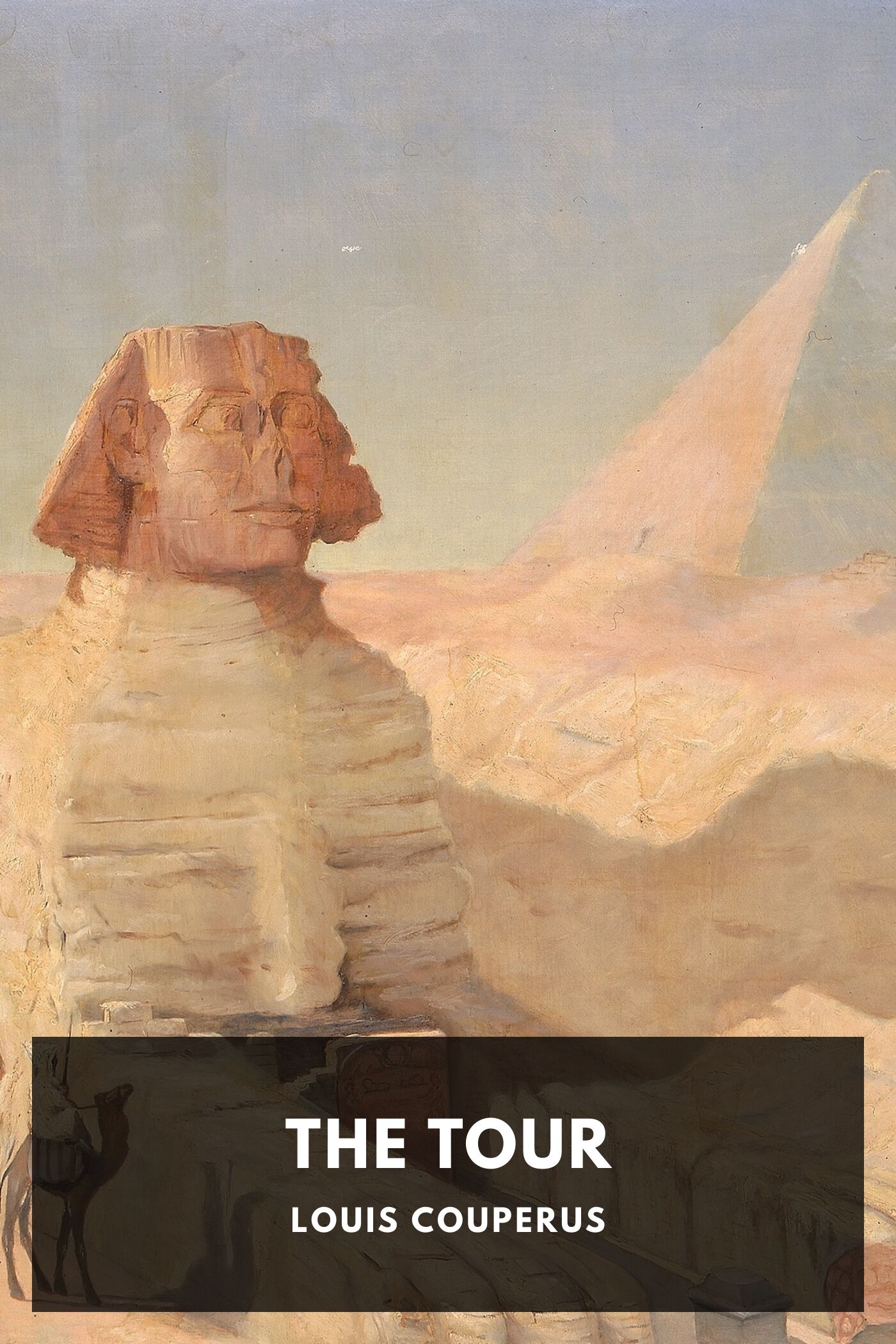
In ancient Egypt, the immensely wealthy Roman Publuis Sabinus Lucius embarks on a journey through Egypt, traveling up the Nile from Alexandria to Memphis, past the Sphinx and the pyramids of Giza, and eventually beyond the cataracts to Ethiopia. His large entourage includes, among others, his uncle Catullus, who lives off his nephew’s fortune; his slave and tutor Thrasyllus; the young African slave Tarra; and the Greek slave Cora. Cora is secretly in love with Lucius, but he does not return her affection. The group is led through Egypt by the guides Ghizla and Kaleb, who never miss an opportunity to fleece their foreign guests.
The reason for Lucius’ journey is his attempt to cope with the loss of his beloved, the Greek slave Ilia. Ilia has suddenly disappeared and Lucius suspects she was kidnapped by pirates. In reality, she has fled with a sailor she loved, though no one dares to tell Lucius the truth. Through conversations with oracles, Egyptian priests, mystics, and hermits, he tries to uncover what happened to Ilia.
The mysterious and supernatural elements in the story highlight how, even in the age in which the novel is set, Egypt was already an ancient civilization in decline. Couperus bases his lavish descriptions of decadent Egypt on the works of the classical historian Strabo. Although he had always wished to visit Egypt, he never actually did. The Tour fits neatly with his other historical novels in which he explores ancient civilizations and themes of fate and decline.
The Tour was first published as a serial in the magazine Groot Nederland before it was published as a novel in 1911.
Book Details
- Print length
- 179 pages
- Language
- English
- Publisher
- Standard Ebooks
- Publication date
- April 3, 2025
The Tour
Louis CouperusMore from Fiction

Moby Dick
Herman Melville

A Room With a View
E. M. Forster

Crime and Punishment
Fyodor Dostoevsky

Alice’s Adventures in Wonderland
Lewis Carroll

The Count of Monte Cristo
Alexandre Dumas

Middlemarch
George Eliot

The Blue Castle
L. M. Montgomery

The Adventures of Sherlock Holmes
Arthur Conan Doyle

Jane Eyre
Charlotte Brontë

The Mysteries of Udolpho
Ann Radcliffe