

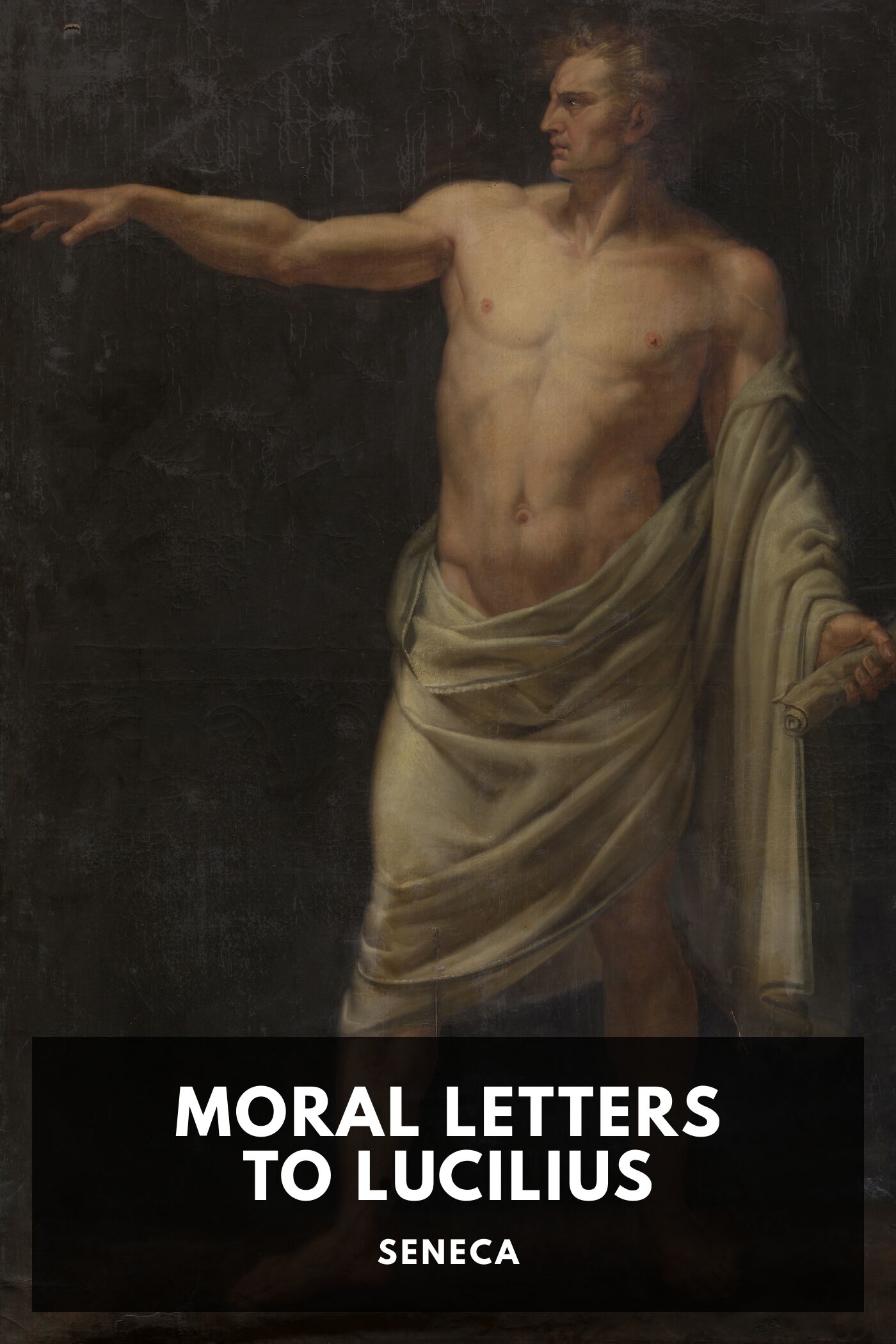
About this book
Seneca was a Stoic philosopher and statesman in Rome’s early post-Augustan era. He was Nero’s tutor, and then his advisor when Nero became emperor in 54 CE. After Seneca retired from public life, he wrote a series of letters to his friend Lucilius, the procurator of Sicily. These letters were circulated right before Seneca’s death in 65 CE, when Nero forced him to commit suicide for his alleged involvement in a conspiracy.
These letters, which were written for widespread publication as well as directly to Lucilius, mainly focus on guiding the reader to a life well-lived. At times, the advice is regarding specific personal issues, such as when he gives a review of a book written by Lucilius. Other letters give Seneca’s thoughts on broader issues like slavery, independence of thought, and virtue. Through all of them, his Stoicism shines through, whether in his metaphysics (like when he writes on “the god within us”) or in his focus on how virtue is the only good. His diverse interests are also on display, as when he addresses current events (like the burning of Lyons), or when he speculates on science (like when he offers his thoughts on animal instincts).
These letters have been popular and influential since their initial circulation, and were widely read from the Roman period, up through the Middle Ages, and into the Renaissance, where Michel de Montaigne used them as a model for his Essays . They remain highly regarded today for their practical and sage advice.
Book Details
- Print length
- 776 pages
- Language
- English
- Publisher
- Standard Ebooks
- Publication date
- October 16, 2026
Moral Letters to Lucilius
SenecaMore from Seneca

More from Fiction

Moby Dick
Herman Melville

A Room With a View
E. M. Forster

Crime and Punishment
Fyodor Dostoevsky

Alice’s Adventures in Wonderland
Lewis Carroll

The Count of Monte Cristo
Alexandre Dumas

Middlemarch
George Eliot

The Blue Castle
L. M. Montgomery

The Adventures of Sherlock Holmes
Arthur Conan Doyle

Jane Eyre
Charlotte Brontë

The Mysteries of Udolpho
Ann Radcliffe