

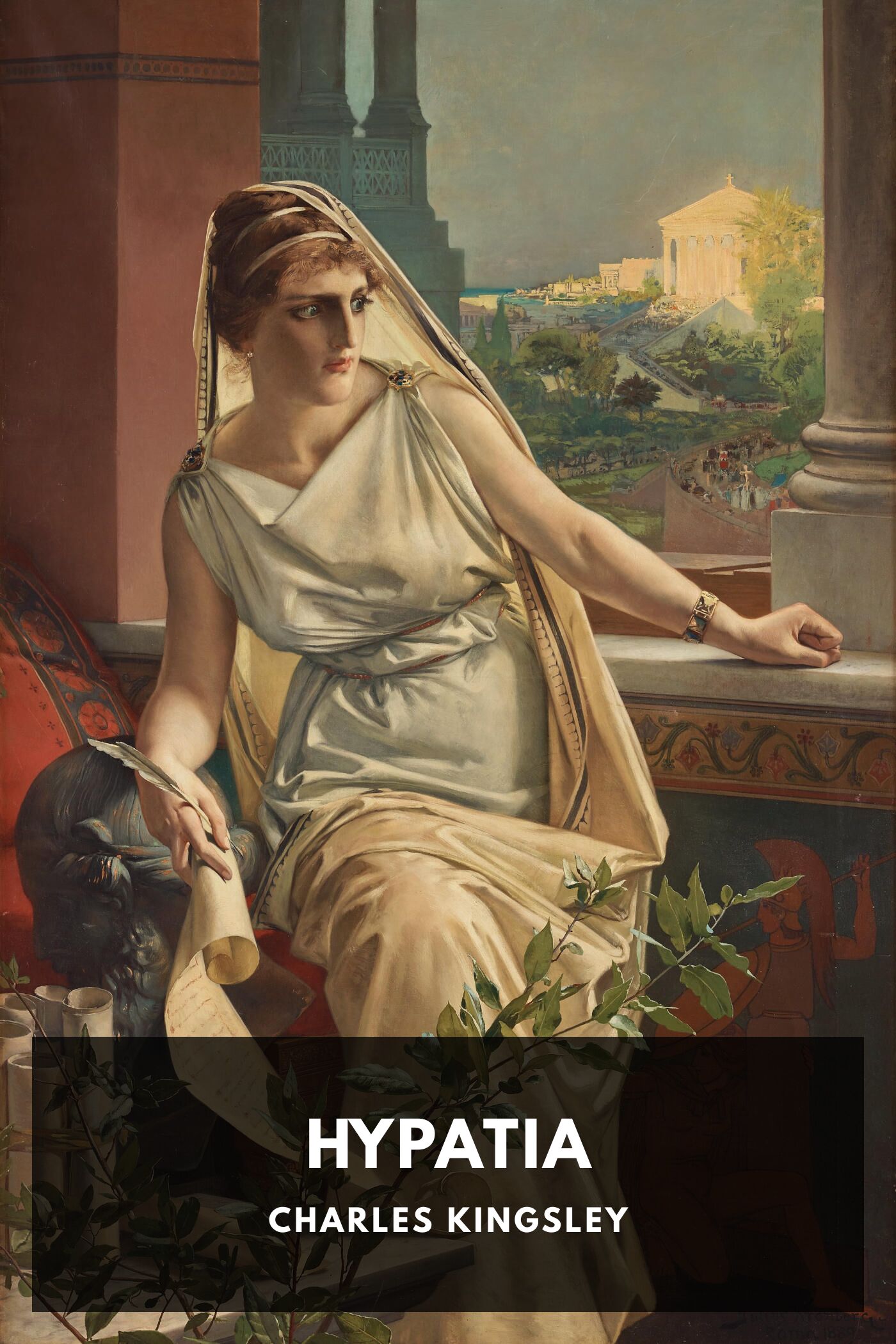
About this book
Philammon is a young monk living in an isolated Egyptian monastery circa 400 AD. He feels a longing to see the world, so he embarks on a trip to Alexandria, a city teeming with culture and learning. On his way he meets Pelagia, a beautiful courtesan traveling up the Nile with a band of Goths in search of Asgard.
On reaching the legendary city, Philammon quickly finds himself embroiled in the feud between Orestes, the city’s prefect, and Cyril, the city’s Catholic archbishop. As he tries to navigate these troubled political waters, he hears of Hypatia, a woman philosopher and one of the last prominent champions of the Greek gods. Hypnotized by her knowledge and beauty, he undertakes to convert her to Christianity—but as his naivete keeps preventing him from reaching the brilliant philosopher, it becomes apparent that she’s being used as a pawn in Orestes’ and Cyril’s dangerous games. Meanwhile, Pelagia and her violent Goth friends complicate matters significantly.
Hypatia is historical fiction based on real events and people. Kingsley wrote it mainly as a Christian apologia, asserting the moral superiority of Christianity over not just pagan religions, but Judaism, Catholicism, and Neoplatonism as well; but despite this, the novel spares few from scrutiny, with almost everyone engaging in their fair share of scheming and violence.
Hypatia herself, historically a prominent philosopher, mathematician, and astronomer, is protrayed as a strong, noble, and pure thinker. Kingsley’s characterization popularized her as the last of the great pagans, and made her an icon for women’s rights and feminism.
The novel is said to have been Queen Victoria’s favorite of Kingsley’s, and it inspired at least three contemporary paintings, one of which sparked an intense debate on nudity in art.
Book Details
- Print length
- 610 pages
- Language
- English
- Publisher
- Standard Ebooks
- Publication date
- July 31, 2026
Hypatia
Charles KingsleyMore from Charles Kingsley
More from Fiction

Moby Dick
Herman Melville

A Room With a View
E. M. Forster

Crime and Punishment
Fyodor Dostoevsky

Alice’s Adventures in Wonderland
Lewis Carroll

The Count of Monte Cristo
Alexandre Dumas

Middlemarch
George Eliot

The Blue Castle
L. M. Montgomery

The Adventures of Sherlock Holmes
Arthur Conan Doyle

Jane Eyre
Charlotte Brontë

The Mysteries of Udolpho
Ann Radcliffe