

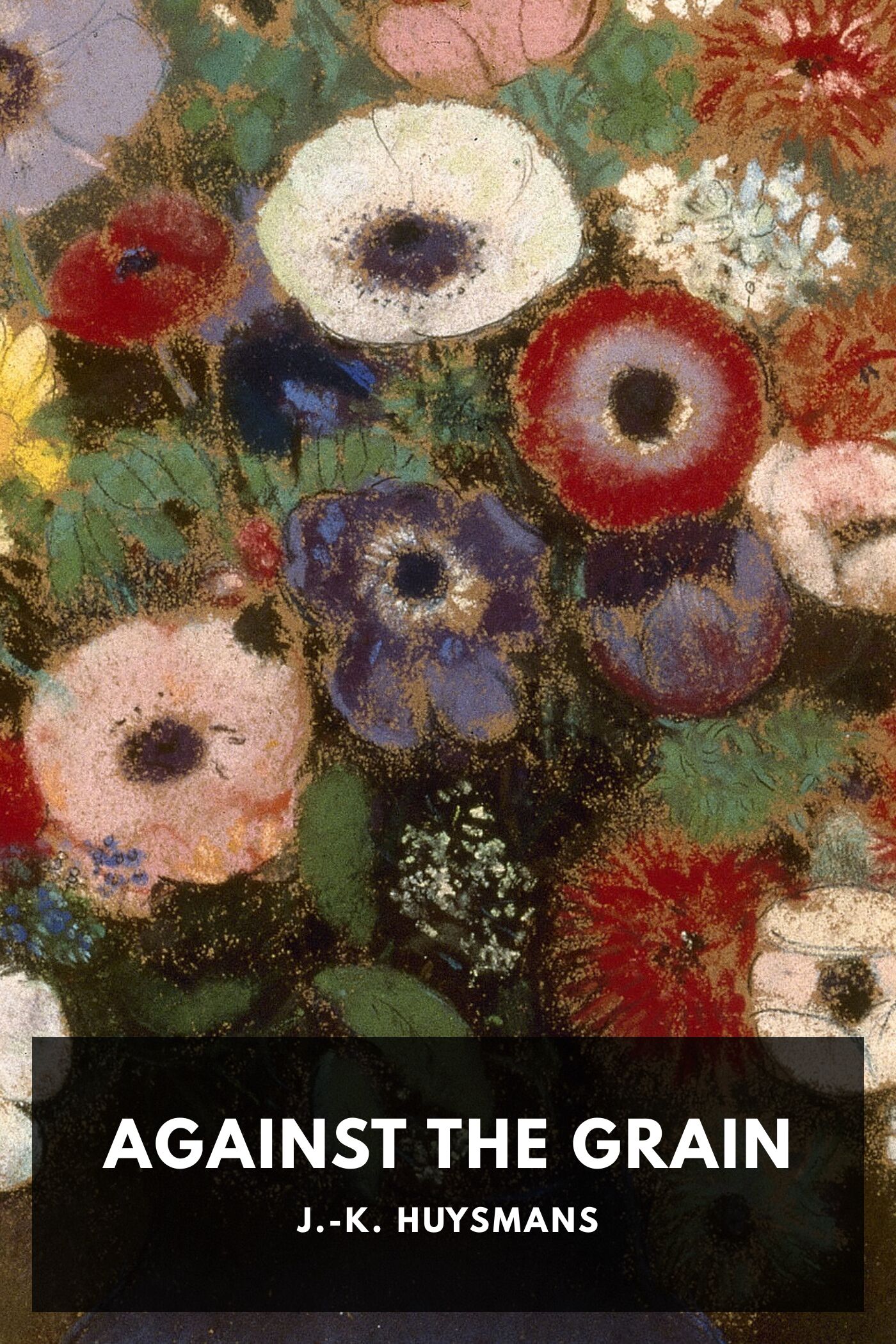
About this book
Ailing, neurotic, and bored with the world, the nobleman Des Esseintes retreats to a secluded cottage in the French countryside. Determined to shun all contact with other people—demanding that even his live-in domestics must wear face-covering robes in his presence—he throws himself into an all-out celebration of the ultimate in artificial and unnatural pleasure. Surrendering to religious and profane literature, morbid paintings, overwhelming perfumes, expensive liquor, grotesque flowers, and reminiscences of his depraved past brings him unsurpassable pleasure, but his mental and physical condition may not be able to keep up.
When Huysmans wrote Against the Grain , he did so to move away from the creative restrictions he felt the Naturalist school of literature imposed on him. According to him, “it limited itself to depicting common existence, and struggled, under the pretext of being true to life, to create characters who would be as close as possible to the average run of mankind.” Instead, he dedicated Naturalism’s attention to detail to just one extraordinary, perverse individual, Des Esseintes—fully expecting the resulting work to fail critically and commercially.
That the novel would become a scandalous success, and would define Decadence as a movement and ideology, was far beyond his expectations. Oscar Wilde was a well-known admirer of the novel, and drew heavily from it to write The Picture of Dorian Gray . During his trial in 1895, Wilde all but confirmed that the “poisonous French novel” in his work refers to Against the Grain .
This Standard Ebooks edition is based on the first unabridged English edition, which was translated anonymously and published by Groves & Michaux in 1926. It reinstates passages that were considered too obscene in previous editions, and includes a preface Huysmans wrote twenty years after the first publication of the book.
Book Details
- Print length
- 292 pages
- Language
- English
- Publisher
- Standard Ebooks
- Publication date
- October 4, 2022
Against the Grain
J.-K. HuysmansMore from J.-K. Huysmans
More from Fiction

Moby Dick
Herman Melville

A Room With a View
E. M. Forster

Crime and Punishment
Fyodor Dostoevsky

Alice’s Adventures in Wonderland
Lewis Carroll

The Count of Monte Cristo
Alexandre Dumas

Middlemarch
George Eliot

The Blue Castle
L. M. Montgomery

The Adventures of Sherlock Holmes
Arthur Conan Doyle

Jane Eyre
Charlotte Brontë

The Mysteries of Udolpho
Ann Radcliffe